Shōnen, shōjo, seinen, josei: the main manga styles and how to recognise them
The four main manga readerships, their visual and narrative codes, and the genres that cut across them: action, romance, horror, slice of life, isekai…
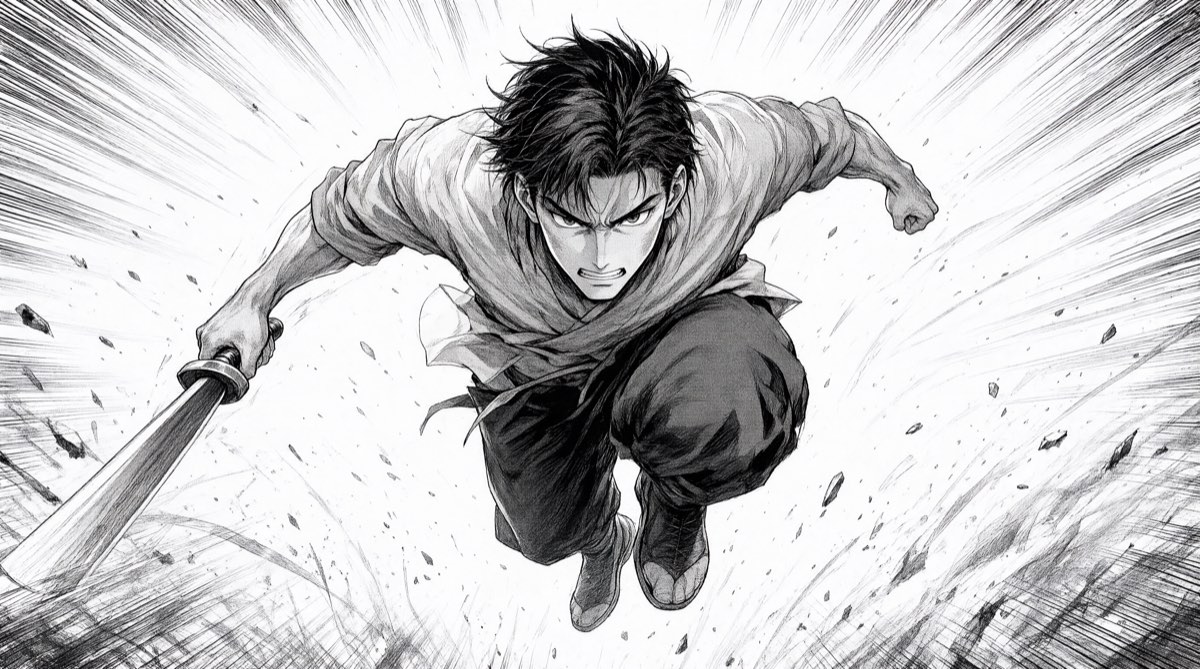
“Shōnen”, “shōjo”, “seinen”, “josei”: these four words are everywhere, on the shelves, in conversations, in Ai-Koma’s menus. They are often taken for genres. They are in fact target readerships, inherited from the Japanese magazines that each have their own readers. But each readership ended up manufacturing its own codes, visual and narrative, recognisable at first glance. Here is how.
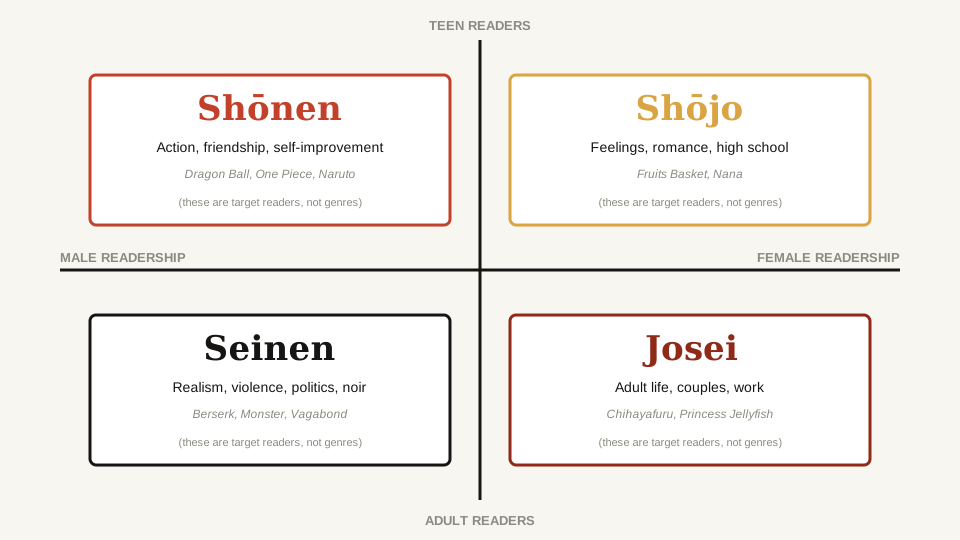
Shōnen: energy
Shōnen targets boys aged twelve to eighteen, but everyone reads it. Its engine is nekketsu, “hot blood”: an ordinary hero sets himself an immense goal, trains, loses, gets back up, makes friends and rivals, and ends up going beyond his limits. Dragon Ball, One Piece, Naruto, My Hero Academia all follow this formula, and it works because it tells the story of adolescence.
How to recognise it: dynamic diagonal panels, speed lines that replace the background, close-ups on the eyes at the moment of decision, huge sound effects, characters with simple, expressive silhouettes. The line is clean, rather round, readable even small. Fights are choreographed like dances, and every technique has a name shouted in capitals.
In Ai-Koma, the Shōnen adventure, Epic fantasy and Sport styles belong to this family; they work at violence level 1 or 2, with bloodless fights or injuries shown.
Shōjo: feeling
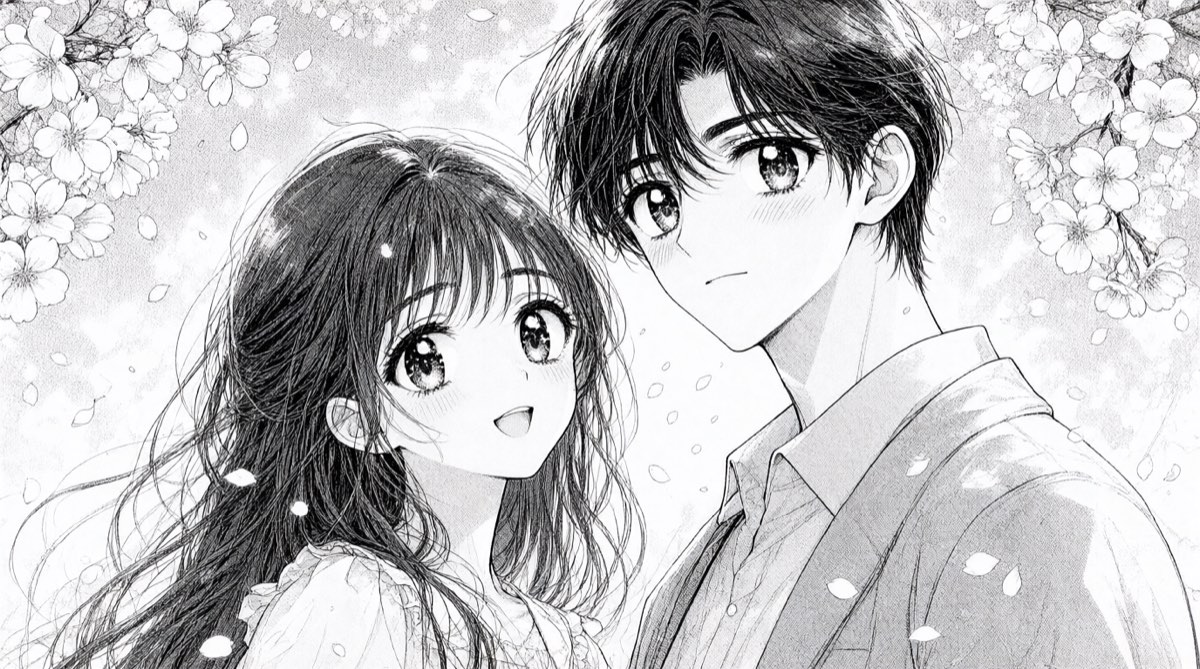
Shōjo speaks to girls of the same age. Its subject is relationships: love, friendship, family, the gaze of others, the first confession. The plots can be fantastic (Sailor Moon, Cardcaptor Sakura) or everyday (Fruits Basket, Kimi ni Todoke), but what counts is what the heroine feels.
How to recognise it: very large eyes, full of highlights; backgrounds that do not show the setting but the emotion, with flowers, bubbles, stars; panels with blurred edges or that overlap; slender characters, hair that floats; fine lettering. Time is often dilated: a whole page for a glance.
At Ai-Koma, Romantic shōjo and Slice of life carry these codes, and the romance level sets how far feeling goes: glances and kisses at level 1, sensuality and suggested nudity at level 2.
Seinen: gravity
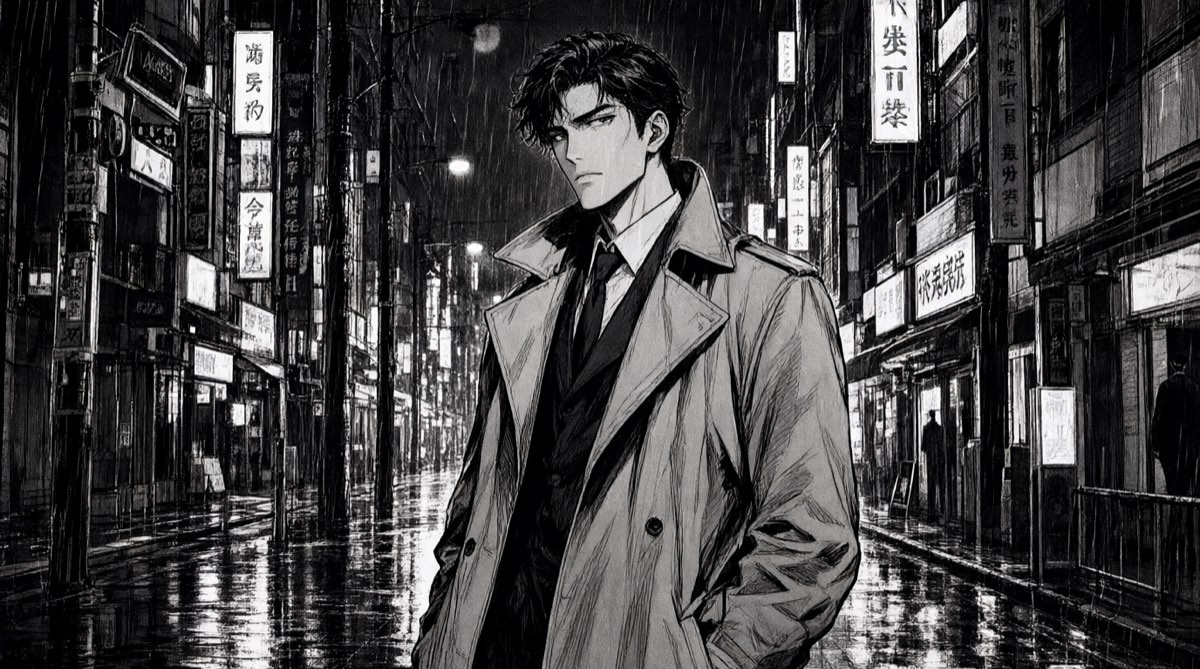
Seinen targets young adult men, from eighteen up. It inherits the gekiga of the 1950s: realism, raw violence, politics, economics, desire, death. Berserk, Monster, Vagabond, Vinland Saga, Tokyo Ghoul. It is also the ground of adult science fiction (Akira, Ghost in the Shell) and of the thriller.
How to recognise it: realistic anatomical proportions, older faces, carefully drawn backgrounds with a lot of black, hatching rather than soft tones, rectangular, settled panels, a slower rhythm and longer dialogue. Violence is shown for what it is, not for spectacle.
This is Ai-Koma’s “Dark” family: Cinematic seinen, Horror, Dark fantasy, Yakuza, Thriller. Violence levels 3 and 4 (gore) are reserved for adults there, with age verification.
Josei: adult life
Josei is the counterpart of seinen for adult women. Where shōjo tells of first love, josei tells of what comes after: work, a couple wearing thin, motherhood, desire that does not look like what was promised. Nana (on the border with shōjo), Chihayafuru, Princess Jellyfish, Honey and Clover.
How to recognise it: smaller, more realistic eyes than in shōjo, adult bodies, credible clothes and interiors, a frank but often elliptical sensuality, self-deprecating humour. The layout is settled, close to seinen, but centred on faces.
At Ai-Koma, the Sensual josei style is its expression, from mature romance to suggested eroticism.
So what about genres?
Readerships describe who you are talking to; genres describe what you are talking about, and they cut across the four boxes. A few, with their visual marks:
- Isekai (“another world”): an ordinary character ends up in a fantasy or video-game universe. Recognisable by its game interfaces, guilds, maps and adventurer outfits.
- Horror: distorted faces, bodies coming apart (Junji Itō’s body horror), invading blacks, panels that close in.
- Slice of life: no dramatic stakes, but an observed everyday life; lots of settings, meals, seasons.
- Sport: nekketsu transposed onto a pitch; stretched panels for a flying ball, sweating faces.
- Ecchi and hentai: the first suggests, the second shows. The line is often smoother and glossier than in the rest of manga. At Ai-Koma, ecchi is level 2; hentai belongs to levels 3 and 4, reserved for verified adults.
- Historical and samurai: brush strokes, detailed kimonos, ink landscapes, a tribute to the print.
- Comedy: characters who suddenly switch to “chibi” (small, round, distorted) for a reaction, tiny panels, sound effects of falling over.
Choosing your style to write
When you create a manga with Ai-Koma, the style you choose sets the line, the layout and the atmosphere of every page, and the content level sets the intensity. Three tips:
- Start from the emotion you want to give, not from the readership. A break-up story can be a tender josei or a dark seinen; the tone decides.
- Match the style to the rhythm of your story. A shōnen needs action scenes to exist; a shōjo needs glances and silences; a seinen needs dialogue and settings.
- Describe your cast. The characters’ ages, origins and builds change everything in the image; Ai-Koma fixes them in a character sheet, drawn once, so each stays themselves from page to page.
To go further: manga vocabulary and the method to write your own.
The illustrations in this article were drawn by Ai-Koma from descriptions written by the team; they depict no real person.
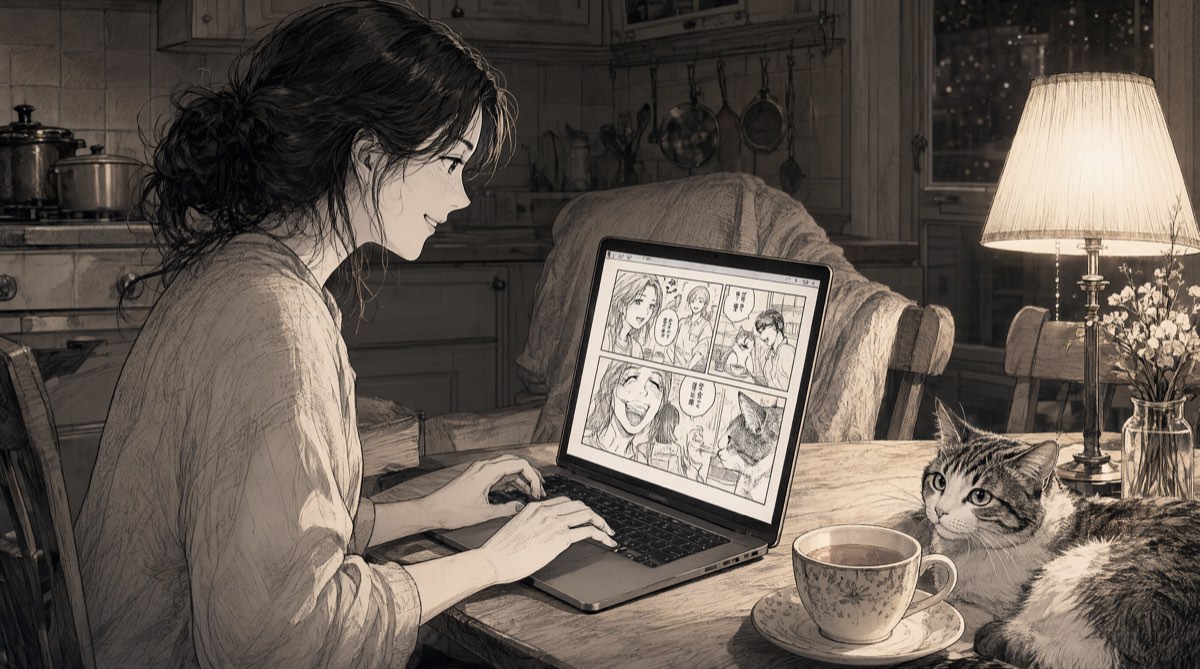 How to write a manga without knowing how to draw: the five-step method
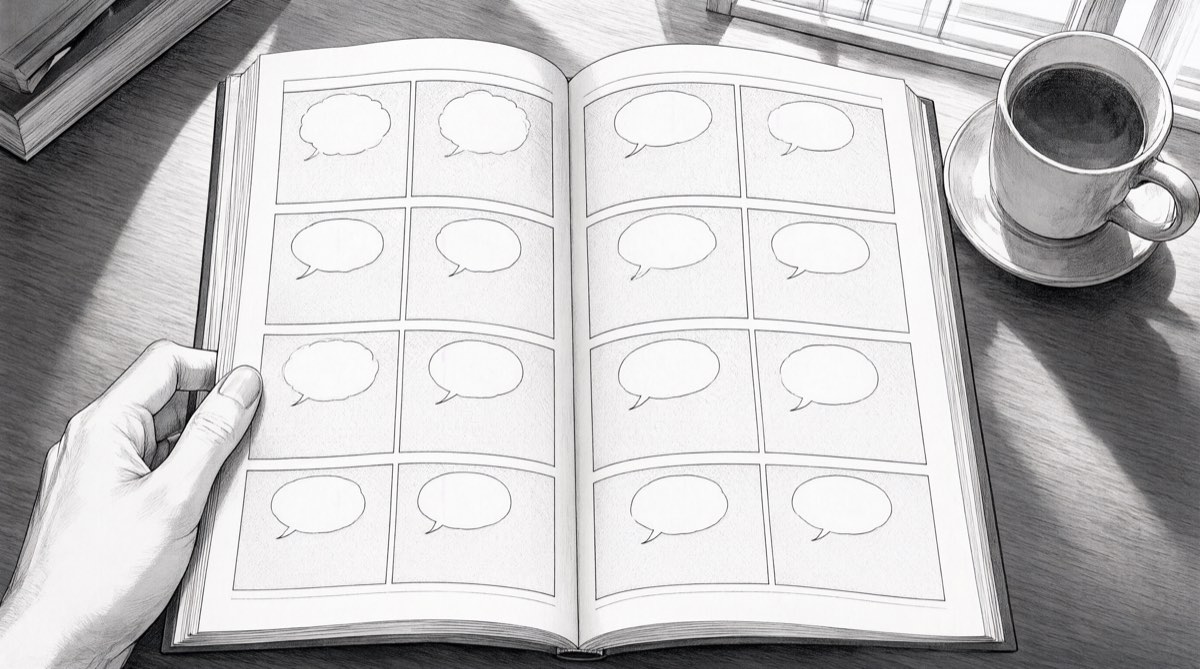 Anatomy of a manga page: panels, speech bubbles, reading direction
 Manga vocabulary: the 30 words you need to know