How to create a manga character: a seven-step method
Want, silhouette, face, outfit, character sheet, voice: a seven-step method to create a manga character readers recognise, even if you can’t draw.
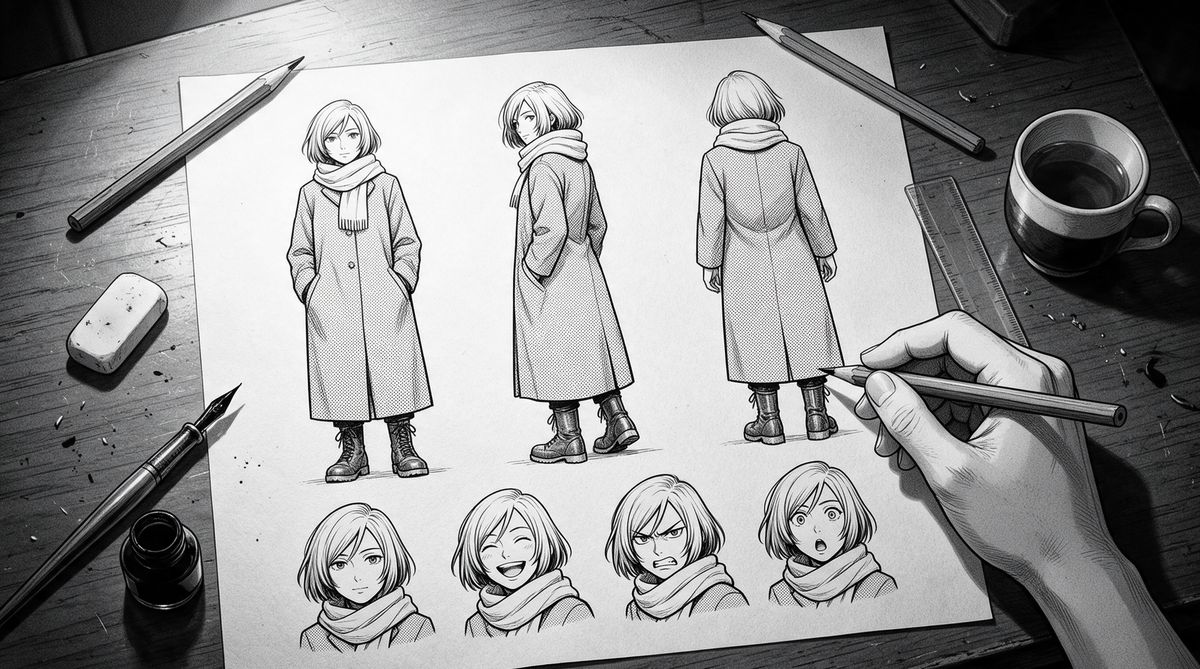
We rarely remember a plot; we remember someone. A strand of hair over one eye, a coat two sizes too big, a way of saying no. A good manga character can be recognised as a silhouette, understood in one line of dialogue, and keeps the same face from the first page to the last. Here is the seven-step method mangaka follow, and then how to use it when you write but don’t draw.
The seven steps at a glance
- Give them a want and a flaw.
- Find their silhouette.
- Build the face: eyes and hair.
- Choose the outfit and one distinctive mark.
- Make their character sheet.
- Give them a name and a voice.
- Test them in three panels.
The first two and the last two are done with words. That is good news: half of character design is writing.
1. A want and a flaw, before the first line
A character is not a look, it is someone who wants something. Write three lines before you think about a haircut: what they want (something concrete, that a panel can show), what stands in the way, and the flaw that gets them into trouble. “She wants to know who rang the bell in the sealed room” moves a story forward; “she is brave” moves nothing at all.
Think about their place in the cast as well. The hero, the rival, the mentor, the one who makes us laugh: each role calls for a contrast with the others. Two characters who want the same thing in the same way are one character too many.
2. The silhouette: recognisable as a shadow
The test is as old as animation: fill your characters in black and stand them side by side. If you can no longer tell who is who, neither will the reader at the back of a panel. Height, build, haircut, loose or fitted clothes set them apart. Shapes speak for themselves: round reassures and amuses, square stands firm, the triangle worries or moves fast.
Proportions are counted in heads. A chibi, the tiny comic version, is two to three heads tall; shōnen and shōjo teenagers are around six to seven; the realistic adults of seinen, seven to eight. Vary heights within your cast: a tall thin one next to a short stocky one reads before the faces do. The codes of each family are in the main manga styles.
3. The face: eyes and hair do the work
In black and white there is no hair colour: there are shapes and values. One head of solid black hair, one left white, one toned grey, and three characters are told apart at a glance. The haircut is their signature; change it rarely, and never without a reason in the story.
Eyes carry the genre: large and sparkling in shōjo, narrower and more realistic in seinen. To avoid giving everyone the same face, vary three things: the shape of the eye, the eyebrows, the jawline. Finally, prepare five expressions for each main character (calm, joy, anger, surprise, sadness): you will need them in every chapter.
4. The outfit and one distinctive mark
An outfit says a job, a period, a temperament. Two or three pieces are enough: a coat, a scarf, boots. Add one distinctive mark that is easy to redraw two hundred times: a scar through an eyebrow, round glasses, a pendant, an eye patch. Just one, and visible: the tattoo hidden on their back helps nobody.
Every extra accessory is one more chance to get it wrong from one panel to the next. The characters we remember are often the simplest.
5. The character sheet
The character sheet (or model sheet) shows the character full length, from the front, three-quarter and back, with their expressions, outfits and height compared with the others. In Japanese animation studios these reference sheets are called settei. It does one thing only, but it matters more than anything: the character has the same face on page 1 and on page 200.
Before any drawing, the sheet fits in one line. Eight points, not one more:
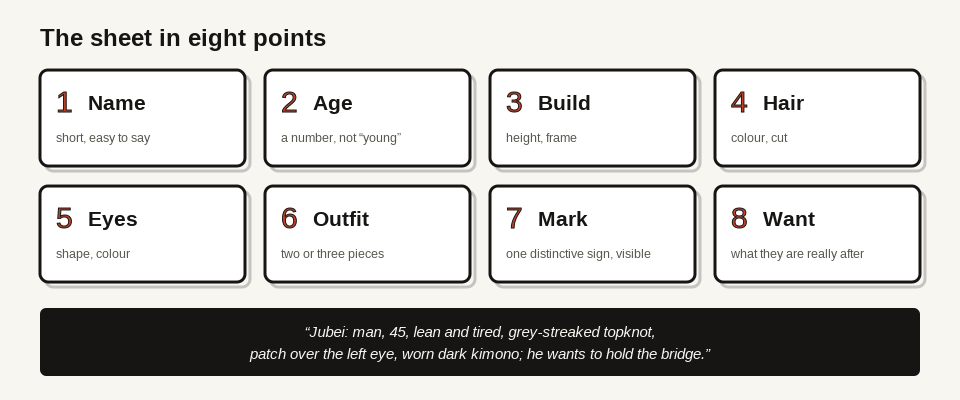
Write numbers and plain nouns, not adjectives: “45” rather than “no longer young”, “grey-streaked topknot” rather than “messy hair”. Whatever is not written will be invented, and invented differently on the next page.
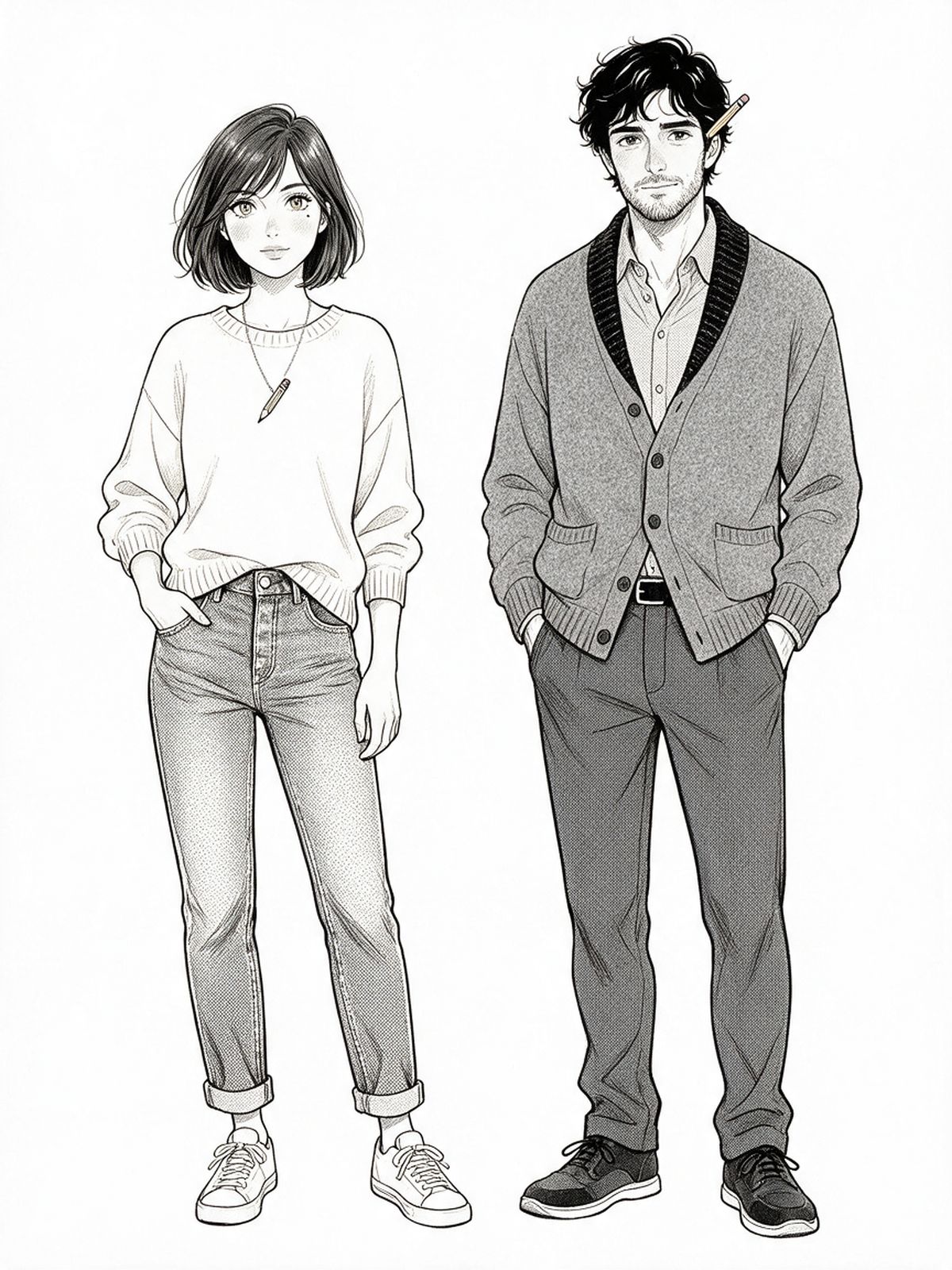
6. A name and a voice
A good name is short, easy to say, and sounds like no other in the cast: Mika and Miko in the same story is a guaranteed mix-up. Give your main characters different initials.
The voice lives in the speech bubbles: a verbal habit, a register (who is formal, who swears, who never finishes a sentence), a length of line. The test: hide the names and read the dialogue. If you can’t tell who is speaking, the voices are not there yet. And keep lines short, about ten words: a bubble is not a paragraph.
7. Test them in three panels
Before you trust them with a story, put your character in three small situations, one panel each: they are refused what they want; they are alone; they meet their opposite. If they react the way anyone would, go back to step 1: a want or a flaw is missing. If they surprise you, they are ready.
If you can’t draw: describing is already drawing
This is where the method meets Ai-Koma. In your story, describe each character in one line, with the eight points. The studio writes the storyboard, derives a visual direction for each recurring character, draws a character sheet once per story, then gives it as a reference to every page: faces hold from one page to the next, and from one chapter to the next when you continue the story.
Three habits change the result:
- Say “woman” or “man”, and give the age as a number. An image model guesses neither from a first name. With us, characters are adults.
- One distinctive detail, and a clean one. Everything you write is drawn everywhere: we have seen “ink-stained fingers” become black hands on every page of a story.
- If you have no preference, let the casting decide. The form offers the origins and body types of the cast; the story decides the rest.
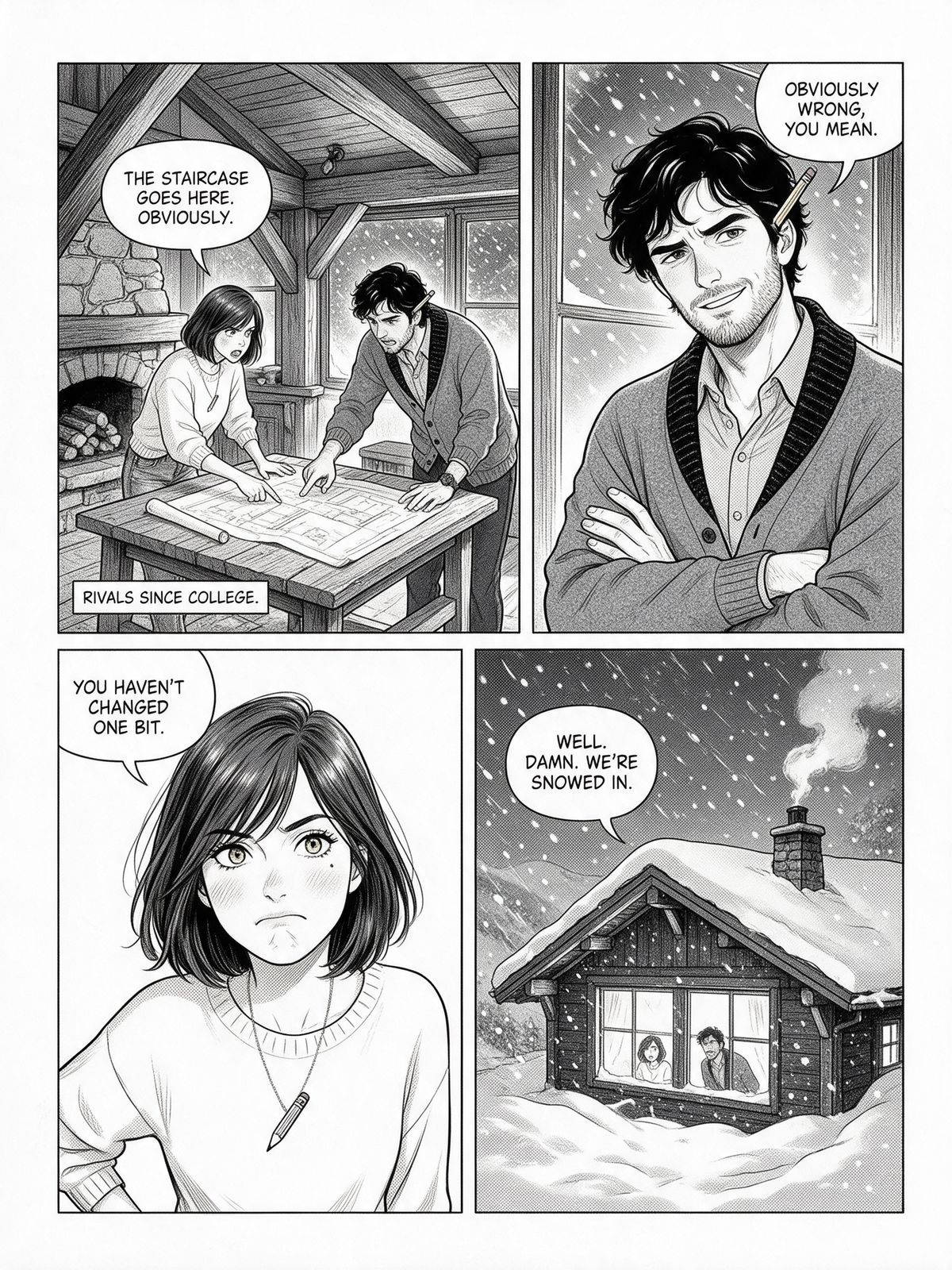
The 50 free credits at sign-up pay for a first page, character sheet included. The gallery shows finished pages with the story that produced them, and the AI manga generator page details the 32 styles.
Five common mistakes
- The perfect character. No flaw, no trouble; no trouble, no story.
- Twin silhouettes. Same height, same haircut: the reader will mix them up by the third panel.
- Too many accessories. Each one is a continuity error waiting for its moment.
- A vague age. “Young” says nothing; “27” says proportions, a face, a way of standing.
- A borrowed character. A famous hero belongs to their author and publisher: invent your own, and it will be yours.
What next: forty story ideas to find them an adventure, and how to make a manga, from the idea to the finished page.
Frequently asked questions
How do I create a manga character if I can’t draw?
By writing them: a want, a flaw, then a one-line description in eight points (name, age, build, hair, eyes, outfit, distinctive mark, want). A studio such as Ai-Koma then draws the character sheet and the pages from that text.
What is a character sheet?
A reference sheet that shows the character full length, from the front, three-quarter and back, with their expressions and outfits. It makes sure they keep the same face from one page to the next.
How many heads tall is a manga character?
Two to three heads for a chibi, six to seven for shōnen and shōjo teenagers, seven to eight for the realistic adults of seinen.
How many characters for a first story?
Two or three: a hero, someone who stands against them, and perhaps an ally. Every extra character needs panels to exist.
Can I reuse an existing character?
Better to invent: a well-known character belongs to their author and publisher. An original character, with a costume and a flaw of their own, belongs to you.
The illustrations in this article were drawn by Ai-Koma from descriptions written by the team; they depict no real person.
 AI-Koma Kids: a personalised bedtime picture book, made with your child
 How to make a manga: from idea to finished page
 Manga story ideas: 40 prompts by genre